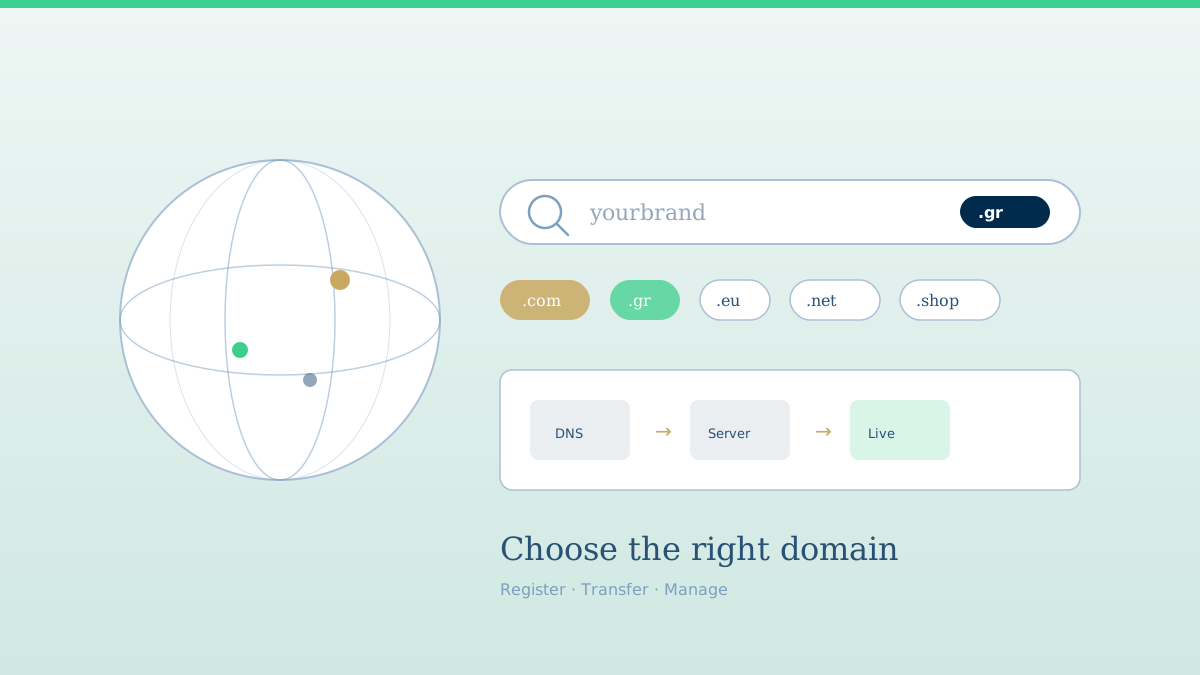
Domain registration is the first and most critical step in any business’s digital presence. A domain name is not just an address on the internet — it is your brand’s identity, the first thing your customers will remember, and a decisive factor in your website’s SEO.
What a domain name is, and why you need one
A domain is the unique address that leads visitors to your website. Instead of using a complicated IP address (192.168.1.1, say), people type a memorable name such as yourbusiness.gr.
The anatomy of a domain name
A full domain consists of:
- Subdomain: www (optional)
- Second-level domain: yourbusiness (the name you choose)
- Top-level domain (TLD): .gr, .com, .eu (the extension)
Types of domain extension: which one to choose
.gr domains – the choice for Greek businesses
The .gr domain is Greece’s country code (ccTLD) and offers:
- Local credibility in the Greek market
- An SEO advantage for Greek-language searches
- Brand recognition as a Greek business
- Name protection within Greece
Cost: €10–25/year depending on the registrar
.com domains – the global choice
.com remains the most popular TLD worldwide:
- Recognised everywhere
- Ideal for international businesses
- High resale value
Tip: register both .gr and .com for full brand protection.
Specialised TLDs
Newer extensions offer more options:
- .shop, .store – for e-commerce
- .tech, .io – for technology companies
- .blog – for blogs and content creators
- .eu – for a European presence
- .restaurant, .cafe – for hospitality
7 golden rules for choosing a domain name
1. Keep it simple and memorable
The ideal domain is:
- Short (8–15 characters)
- Easy to say and to spell
- Free of hyphens and numbers (unless they are part of the branding)
❌ Bad: super-best-greek-coffee-shop-2026.gr
✅ Good: coffeetime.gr
2. Use keywords — in moderation
Including keywords helps SEO:
- plumber-athens.gr for a plumber in Athens
- webdesign-thessaloniki.gr for website development
Careful: do not overdo it — branding matters more in the long run.
3. Avoid trademark problems
Check that the domain does not infringe any trademarks:
- Search the WIPO database
- Check with the Greek Industrial Property Organisation (OBI)
- Google the name for existing businesses
4. Check availability on social media
Use a tool such as Namechk to see whether the name is available on:
- Facebook, Instagram, Twitter
- LinkedIn, YouTube
- TikTok, Pinterest
Consistency of branding across every platform is critical.
5. Prefer .gr if you are targeting a Greek audience
For B2C businesses in Greece, .gr offers:
- Better ranking on Google.gr
- Greater trust from Greek consumers
- A local identity
6. Think long term
Your domain will be with you for years:
- Pick a name that does not limit your growth
- Avoid very specific geographic references if you plan to expand
- Prefer brandable names over generic ones
7. Act quickly
Good domains go fast. When you find the right name, register it straight away.
The domain registration process, step by step
Step 1: check availability
Use a domain search tool to check availability. Most registrars will suggest alternatives if the domain you want is taken.
Step 2: choose a registrar
A domain registrar is a company accredited to sell domains. Choose on the basis of:
- Pricing (watch the renewal price, not just the first year)
- A domain management panel that is easy to use
- WHOIS privacy (protection of personal data)
- DNS management tools
- Technical support in your language
Step 3: register the domain
You will need to provide:
- Contact details (registrant information)
- Registration period (1–10 years)
- Privacy protection options
- Auto-renewal, so you never lose the domain
.gr cost: €10–25/year
.com cost: €12–30/year
Step 4: configure DNS
Connect the domain to your web hosting through:
- Nameservers: pointing to your hosting provider
- A records: linking the domain to an IP address
- MX records: for email routing
Propagation time: 24–48 hours for full activation.
Domain management: best practice
WHOIS privacy protection
WHOIS is a public database of domain owner details. Privacy protection:
- Hides personal details (name, address, phone number)
- Protects you from spam
- Reduces the risk of identity theft
Cost: €5–10/year (often free with premium packages)
Auto-renewal
Always enable auto-renewal so you avoid:
- Losing the domain when it expires
- Domain squatting by third parties
- Website downtime
Domain lock
A registrar lock protects against:
- Unauthorised transfers
- Domain hijacking
- Attacks by hackers
Domain transfer: when and how
People transfer a domain to a new registrar for:
- Better renewal prices
- Consolidating services (hosting and domain with one provider)
- Better support
Transfer requirements:
- The domain must be more than 60 days old
- The domain must be unlocked
- An EPP / authorisation code from the current registrar
Duration: 5–7 days on average
Domain value: investment or expense?
Some premium domains carry a high value:
- Short domains (2–4 characters): €1,000–€100,000+
- Generic keywords: insurance.gr, lawyer.gr
- Brandable names: attractive, memorable names
Domain flipping
Buying and reselling domains can be profitable:
- Buying undervalued domains
- Development (adding content)
- Selling on marketplaces (Sedo, Flippa, Afternic)
Careful: domain squatting — registering someone else’s trademark — is illegal.
Frequently asked questions
How much does a domain cost?
€10–30/year for standard TLDs. Premium domains can run into thousands.
Can I change my domain later?
Yes, but it affects SEO. It is better to choose correctly from the start.
Do I need hosting in order to register a domain?
No, but without hosting the domain will not point to a website.
What happens if I forget to renew my domain?
It enters a grace period (30 days) and then redemption, from which recovery is difficult and expensive.
Conclusion
Domain registration is a strategic decision that affects your branding, your SEO and the success of your online business. Invest time in choosing the right name, protect your identity by registering several TLDs, and manage your domain professionally.
Start looking for the perfect domain for your business today.